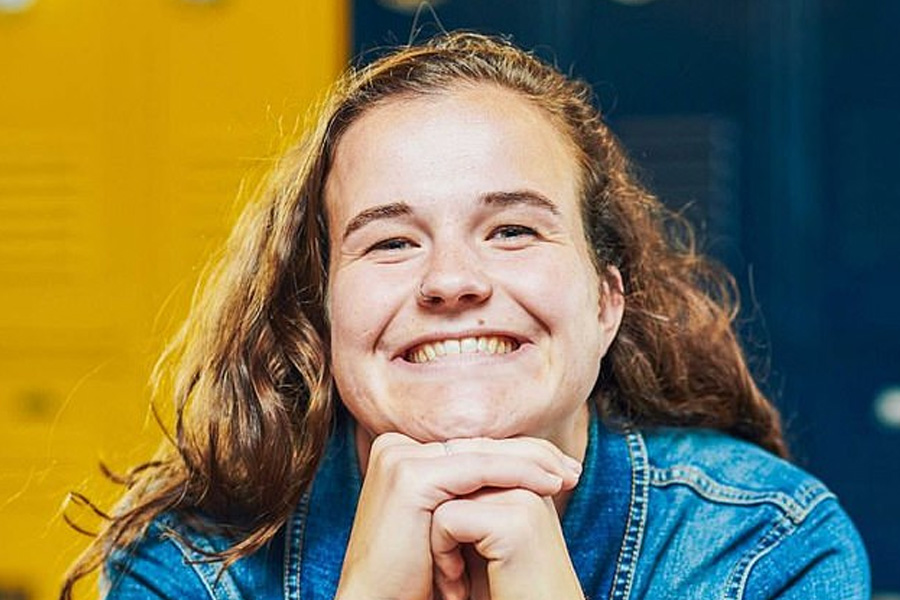
Early Life and a Family Rooted in Public Service
When I look at Alison Fauci’s story, I see a life that moves like a well built current. It is not loud. It does not need to be. It carries the shape of discipline, family, and hard earned achievement. Alison Fauci is best known publicly as the daughter of Anthony Fauci and Christine Grady, but that simple label barely catches the texture of her life. She comes from a family where service, scholarship, and work have long been part of the air everyone breathes.
Anthony Fauci, her father, is one of the most recognizable physicians in modern American public life. Christine Grady, her mother, has built a respected career in nursing and bioethics. Together they raised three daughters: Jennifer, Megan, and Alison. In that home, achievement was not a trophy on the wall. It was a habit. It was the daily rhythm of showing up, studying hard, and taking responsibility seriously.
Alison is the youngest of the three sisters. Jennifer Fauci is a clinical psychologist, and Megan Fauci became an elementary school teacher in New Orleans after a path that included service work and education. That sibling group makes the Fauci household feel less like a formal dynasty and more like a sturdy tripod, each sister standing on her own ground while still part of the same foundation.
Her grandparents also widen the story. On her father’s side, Stephen Fauci and Eugenia Fauci were part of the older family line that shaped Anthony Fauci’s own early life. On her mother’s side, John H. Grady Jr. and Barbara Hannon Grady represent another branch of the family tree, one that also carried strength, civic involvement, and longevity. When I trace these names together, I see a family portrait built from different rooms of the same house.
Education and the Making of a Student Athlete
Alison Fauci’s education gives her public profile its clearest outline. She graduated from National Cathedral School in 2010, then went on to Stanford University, where she studied computer science and rowed for the women’s team. That combination says a lot. Computer science demands logic, patience, and precision. Rowing demands endurance, timing, and trust. Put them together and you get a person who knows how to think in systems and move with a crew.
At Stanford, Alison was more than a student who happened to row. She was a committed varsity athlete, a team captain, and a presence in the boat over multiple seasons. Her academic record was equally sharp. She earned major academic honors, including recognition for a GPA that stood at 4.03 in one documented year. That is the kind of number that does not drift into place by accident. It is built stroke by stroke, assignment by assignment.
I find the rowing detail especially revealing. Rowing is a sport that hides ego in plain sight. Nobody wins alone in an eight person shell. Every pull matters. Every mismatch becomes visible. That makes it a fitting metaphor for Alison’s broader life. She has not been publicly framed as a celebrity in the conventional sense. Instead, she appears as someone who has lived through institutions that reward discipline over display.
She also served as a section leader for CS106A and did research work involving secure coding. That means her Stanford years were not only about athletics and grades. They were also about helping others learn and engaging with the practical side of computing. She was not just a student absorbing knowledge. She was also a builder of knowledge.
Career Path and Professional Identity
After Stanford, Alison Fauci’s public trail points toward software engineering. She was connected to Twitter and gave a technical presentation on Android data serialization. That detail matters because it places her in the world of real product engineering, where small design choices can shape the daily experience of millions of users.
Software engineering can feel like architecture made of mist. Users see a smooth interface, but behind it lies a maze of systems, constraints, and compromises. Alison’s work on serialization suggests she was dealing with the invisible plumbing of mobile software, making data move more cleanly and efficiently. That is not glamorous work, but it is crucial work. It is the kind of labor that keeps the machine from coughing.
Later public references describe her as having spent time as an EMT. That is a striking contrast to the software world. One role exists in code and screens. The other exists in sirens, speed, and human urgency. I read that shift as a sign of range. It suggests a person willing to move from one kind of service to another, from digital systems to the fragile reality of emergencies.
There are no widely publicized finance records, salary disclosures, or personal net worth reports tied to Alison Fauci. That absence is worth noting. In an age that often mistakes visibility for value, her story remains mostly outside the cash register of public celebrity. Her life has been more about competence than performance.
Family Relationships and the Public Shape of Private Life
My favorite thing about Alison Fauci is how the public record discloses her family without exposing her. We know her parents are Anthony Fauci and Christine Grady. We know Jennifer and Megan are her sisters. Both sets of grandparents are known. Even throughout the pandemic, her family experienced loss and concern like many families.
Anthony Fauci publicly discussed Alison’s boyfriend and COVID-19-related family grief. That detail revealed Fauci family emotions. It highlighted that beyond the public persona was the same love, worry, and sorrow most families face.
Clinical psychologist Jennifer Fauci enriches the family. Psychology, bioethics, medicine, education, software, ER. Each branch of the family seems to favor a particular human mending method. This pattern continues in Megan’s teaching. Alison’s path through rowing, computer science, engineering, and emergency service fits together.
I would describe the family as function-driven, not spectacle. They appear to flock around what people need: care, direction, treatment, instruction, organization, and in Alison’s case, cleaner technology and a willingness to serve.
Timeline of Alison Fauci
Alison’s history is full of milestones but not famous headlines.
National Cathedral School graduated her in 2010.
She rowed varsity for Stanford in 2012 and earned academic honors.
She was a standout undergraduate athlete and rower at Stanford in 2013.
Computer science graduate and team captain, she graduated from Stanford in 2014.
She gained popular technical recognition for Twitter and Android serialization efforts.
The epidemic brought her family into the spotlight as her father discussed family losses.
As an EMT after Twitter, she expanded her life outside tech by 2022.
A 2025 race record showed her finishing a 50K, continuing her long-running endurance.
Why Alison Fauci’s Story Feels Distinct
I think Alison Fauci’s story stands out because it resists easy packaging. She is not simply the daughter of a famous father. She is not only a former rower, or a computer scientist, or an EMT. She is the sum of those parts, shaped by family, sharpened by education, and carried forward through work that spans both intellect and action.
There is something almost nautical about her life. Rowing taught rhythm. Computer science taught structure. Family gave direction. Service gave urgency. Together they make a life that moves like a vessel cutting through layered water, steady even when the surface changes.
FAQ
Who is Alison Fauci?
Alison Fauci is the youngest daughter of Anthony Fauci and Christine Grady. She is publicly known for her Stanford education, her rowing career, and her later work in software engineering and emergency service.
Who are Alison Fauci’s family members?
Her immediate family includes her father Anthony Fauci, her mother Christine Grady, and her sisters Jennifer Fauci and Megan Fauci. Her paternal grandparents are Stephen Fauci and Eugenia Fauci. Her maternal grandparents are John H. Grady Jr. and Barbara Hannon Grady.
What did Alison Fauci study?
She studied computer science at Stanford University.
Was Alison Fauci an athlete?
Yes. She rowed for Stanford and served as a team captain.
What kind of work has Alison Fauci done?
Her public professional trail includes software engineering work tied to Twitter and later time as an EMT.
Is there much public information about Alison Fauci’s personal life?
Not much. Public information exists mainly through family references, education, athletics, and career notes. Her private life has remained largely outside the spotlight.
Making Room For Real Life With An Essex Home Extension
Building A Backlink Reputation That Search Engines Trust
When Your Air Conditioner Starts Acting Like A Drama Queen
Making Container Moves Behave Like A Well Rehearsed Parade
Park City Comes Alive Through Art Music And Mountain Culture