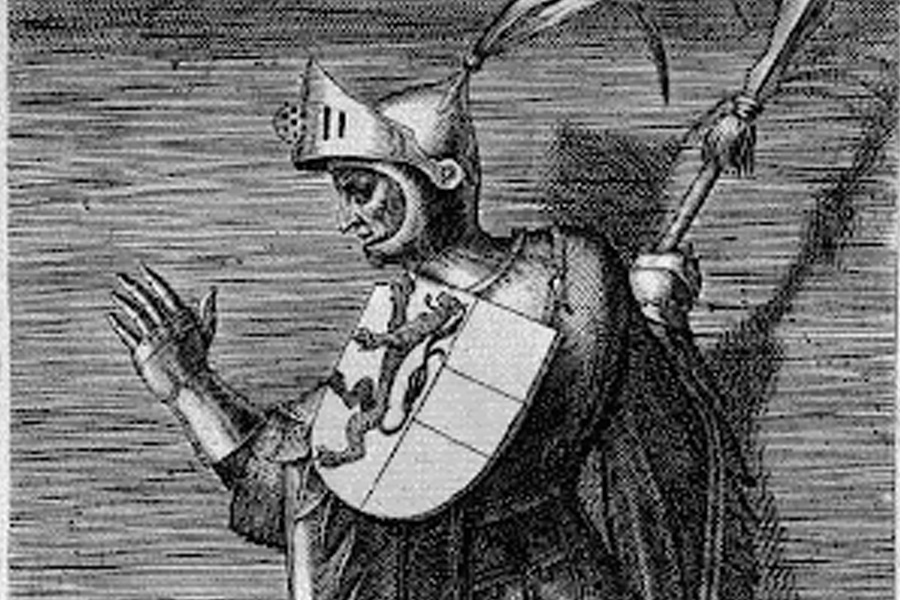
I first stumbled upon Godfrey The Hunchback while digging through medieval tales of power and deformity. Born around 1040 in Lower Lorraine, he entered the world as the eldest son of a noble house already tangled in imperial politics. A pronounced hunchback and unusually small stature marked him from youth. Yet this physical challenge never defined him. Instead, it sharpened his resolve. By 1069, at roughly age 29, he inherited the title of Duke of Lower Lorraine. He ruled until his death in 1076, a span of just seven years.
His mind, contemporaries noted, burned bright with strategy and loyalty. He stood barely five feet tall in an era of towering warriors, yet he commanded respect across the Holy Roman Empire. I picture him as a coiled spring, body bent like a weathered bridge yet carrying the weight of vast territories. Lower Lorraine, roughly the size of modern Belgium and the Netherlands combined, fell under his command. He backed Emperor Henry IV without fail during the early sparks of the Investiture Controversy. That conflict pitted pope against emperor over who could appoint bishops. Godfrey chose the imperial side. His support proved crucial in campaigns that spanned hundreds of miles.
The Family Web That Forged Empires
Godfrey The Hunchback did not rise alone. His family formed a sprawling network of alliances, rivalries, and blood ties that stretched from Lorraine to Tuscany. I find their connections fascinating, like roots of an ancient oak gripping multiple kingdoms. Here is a clear breakdown in table form for quick reference.
| Relation | Name | Key Dates | Role and Influence |
|---|---|---|---|
| Father | Godfrey the Bearded | 997 to 1069 | Duke who secured son’s succession after rebellions and reconciliations |
| Mother | Doda | Died early 1050s | Left him motherless in childhood, little else recorded |
| Stepmother | Beatrice of Lower Lotharingia | 1020 to 1076 | Powerful widow who brought Tuscan lands and became mother in law |
| Spouse | Matilda of Tuscany | 1046 to 1115 | Stepsister, margravine, and fierce papal ally; marriage collapsed |
| Child | Beatrice | Born and died 1071 | Only daughter, infant death strained the union |
| Sister | Wiltrude | 1035 to 1093 | Full sibling, maintained family ties in Lorraine |
| Sister | Ida of Lorraine | 1040 to 1113 | Mother of crusader Godfrey of Bouillon |
| Nephew and Heir | Godfrey of Bouillon | 1060 to 1100 | Designated successor, later led the First Crusade and ruled Jerusalem |
The most complicated tie is Matilda of Tuscany. She married Godfrey The Hunchback in Verdun on 30 December 1069 as his stepsister through Beatrice. Their merger to unite Lorraine and Tuscany failed within months. One child was born in 1071. Baby Beatrice, named after her grandmother, lived barely weeks. Loss shattered the marriage. By 1072, they split permanently. On returning to Italy, Matilda supported Pope Gregory VII. Godfrey supported the emperor. The ideological conflict became personal. Their story reflects the era: grief and politics destroying huge partnerships.
His sister Ida of Lorraine, born the same year, tied the family to crusading renown. Although Matilda fought him, her son Godfrey of Bouillon was appointed heir by Godfrey The Hunchback. Wiltrude completed the siblings, quieter but crucial to Lorraine stability. Going back to the Counts of Verdun, Matilda of Saxony, and the Countess of Flanders, Gothelo I and Godfrey I were related. These connections formed a dynasty that shaped European power struggles for three centuries.
Military Campaigns and Political Maneuvers
Godfrey The Hunchback was no cipher. Just months into his power, he allied with the Bishop of Utrecht in 1070. They started a quick Meuse estuary campaign. They exiled Count Dirk V and his stepfather Robert I of Flanders after conquering Holland. Frisia east of the Vlie was obtained by Godfrey. Some say he fortified Delft that year. The operation included 150 square miles of contested lowlands.
He aided Henry IV against the Great Saxon Revolt by marching south in 1075. The imperial army defeated the insurgents at Langensalza on October 27, 1075. Godfrey’s forces helped win a battle with almost 10,000 combatants. He pledged loyalty in the Reichstag in Worms in early 1076 amid ecclesiastical turmoil. He returned north to resume Holland and Frisia operations. Imperial control in the Low Countries was temporarily stabilized by these acts. Each of the three major campaigns in six years changed territorial borders by hundreds of miles.
The Dramatic Assassination and Its Ripples
February 1076 marked the end. While campaigning again in Holland and Frisia, Godfrey The Hunchback met his fate in a shocking manner. On 26 or 27 February, an assassin struck while he used a latrine. The blade came from below, mortally wounding him. He lingered a week in Utrecht before dying. The killer, likely Giselbert in service to Dirk V or Robert the Frisian, acted on revenge for the 1070 losses. I imagine the scene as a stark reminder of vulnerability: even dukes could fall in the most undignified moment. Burial took place in Verdun beside his father. His death at age 36 weakened imperial hold on the region and allowed Dirk V to reclaim Holland within months.
Extended Timeline of Godfrey The Hunchback
To grasp the pace of his life, consider this chronological overview with precise dates and events.
- Circa 1040: Birth in Lower Lorraine as first son of Godfrey the Bearded and Doda.
- Early 1050s: Mother Doda dies; childhood shaped by political storms.
- 1054: Father marries Beatrice of Lower Lotharingia; betrothal to Matilda arranged.
- 30 December 1069: Succeeds as Duke of Lower Lorraine upon father’s death; marries Matilda in Verdun.
- 1070: Joint campaign conquers Holland and Frisia; possible fortification of Delft.
- 1071: Daughter Beatrice born and dies in infancy; marriage begins to unravel.
- 1072: Failed reconciliation attempt in Tuscany; permanent separation from Matilda.
- 1073 to 1074: Investiture Controversy heats up; remains staunch imperial supporter.
- 1075: Fights in Saxon Revolt; helps secure victory at Battle of Langensalza on 27 October.
- January 1076: Attends Reichstag in Worms.
- February 1076: Renewed Holland campaign; assassinated 26 or 27 February; dies after one week in Utrecht.
- Post 1076: Nephew Godfrey of Bouillon named heir, later claims the duchy in 1087 to 1089.
This timeline spans 36 years yet packs decisive action into the final seven.
FAQ
Why did Godfrey The Hunchback earn his nickname despite his military successes?
His pronounced hunchback and small build earned the label early in life. Chroniclers still praised his excellent mind and excelling spirit. The name stuck as a vivid contrast to his achievements, reminding us that physical limits never capped his command.
How did the marriage to Matilda of Tuscany influence his rule?
The 1069 union brought Tuscan titles but delivered constant tension. Their 1071 child’s death and 1072 split forced Godfrey to rule Lorraine alone while Matilda supported the opposing papal faction. It highlighted how personal bonds could fracture political ones.
What role did Godfrey of Bouillon play in the family legacy?
As nephew and designated heir, he carried the line forward. Godfrey The Hunchback nominated him despite resistance. The younger Godfrey later led the First Crusade, captured Jerusalem in 1099, and ruled as its first Christian king until 1100. The uncle’s choice proved prophetic.
Did Godfrey The Hunchback have any recorded financial or economic policies?
Medieval records offer scant details on personal wealth. His power rested on feudal dues from Lorraine lands and brief Tuscan rights through marriage. No ledgers survive, yet his campaigns required funding armies of hundreds, suggesting steady revenue from tolls and estates.
How many direct descendants did Godfrey The Hunchback leave behind?
Only one child, Beatrice, born and died in 1071. No further offspring appear in any accounts. The family line continued through his sisters, especially Ida, whose descendants shaped crusader history for generations.