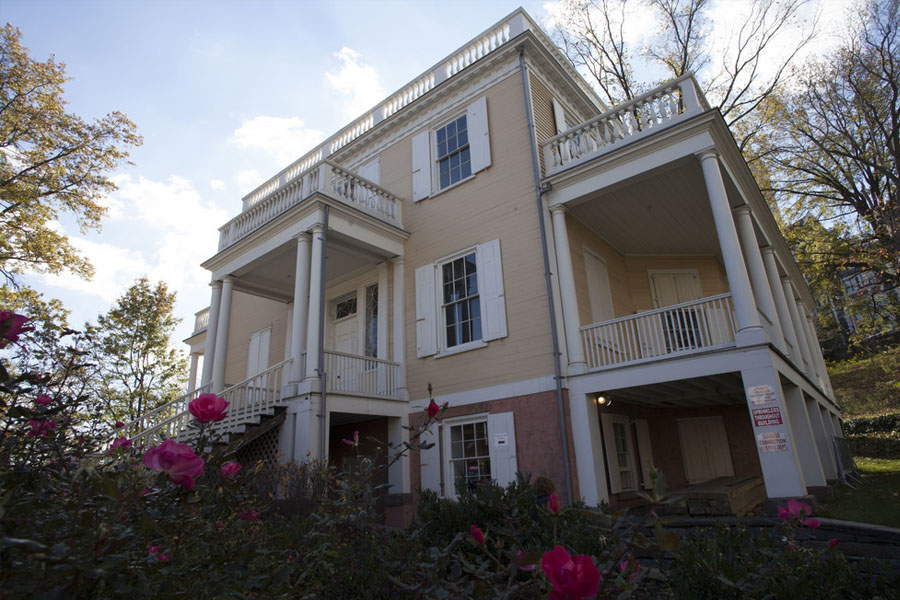
The house of Grange and the man at its center
When I look at Alexander Hamilton Of Grange, I see more than a name in a family register. I see a Scottish laird standing at the crossroads of land, lineage, and legacy. He belonged to the Grange line of Ayrshire, a branch tied to Kerelaw Castle and the old rhythm of local power in Scotland. His life sits in that old world where family name, estate, and reputation moved together like gears in a single clock.
Alexander Hamilton Of Grange is generally placed in the early 18th century, with his birth around 1690 and his death in 1763. He is remembered as a laird rather than as a politician, soldier, or merchant in the modern sense. That makes him easy to overlook, yet his place in the family tree is anything but small. He is one of the key roots from which later Hamilton lines spread outward, including the branch that eventually reaches the famous Alexander Hamilton of American history.
His home world was Ayrshire, and his identity was tied to land. That matters. In the Scottish laird system, land was not just property. It was memory, authority, inheritance, and obligation. A family like the Hamiltons of Grange did not merely own an estate. They carried a title through generations like a torch passed across a dark field.
His parents, marriage, and the older Grange line
The extensive familial structure around Alexander Hamilton Of Grange is revealing. His parents were Rebecca Cuninghame and John Hamilton. Their names link him to earlier local families whose marriages woven land, position, and connection.
Before him, the Grange lineage goes back. The family tree includes Elizabeth Crawford, Sir John Hamilton of Grange, Janet Cuninghame, and Alexander Cuninghame. The family was not built straight, hence their names matter. It was handwoven over generations.
Elizabeth Pollock married Alexander Hamilton Of Grange. Her parents were Sir Robert Pollock and Annabella Stewart of Pardovan. The Hamiltons of Grange joined another powerful family network with this marriage. Old Scottish society did not ignore such a coupling. It was bridge. Estates, alliances, and future claims were linked.
The marriage created a huge family, which mattered more. Large families were not just about love or size. Dynastic engines. Children can carry branches into new marriages, parishes, estates, or lines of descent.
Children and descendants
Alexander Hamilton Of Grange and Elizabeth Pollock had a broad family, and the children form the most important part of his personal story. Their names rise like a row of stones across a river, each one marking continuity.
John Hamilton of Grange was the eldest son. He was baptized in 1712 and died unmarried. Robert Hamilton of Grange followed, born in 1715 and also dying unmarried. Alexander Hamilton, born in 1717, continued the line through marriage to Rachel Cunninghame of Collelan. James Hamilton became the crucial next figure in the family story, especially because his own line leads toward the better known Alexander Hamilton.
There were other children too. William Hamilton married Jean Donald and had issue. Joseph Hamilton appears in the records. Another William Hamilton died in infancy. A daughter also died young, which reminds me that these old family histories always carry both elevation and grief. Elizabeth Hamilton married Alexander Blair and had issue. Walter Hamilton and George Hamilton are also recorded among the sons who died unmarried.
The family tree does not sit still. It spreads. One branch stayed within Scottish gentry circles. Another moved outward through marriage and commerce. Another carried the Hamilton name toward the Atlantic world. That is what makes this family so interesting. It is not just a list of names. It is a map of motion.
The later Alexander Hamilton of Grange and the family after him
One point deserves care. The Grange name was used by more than one Alexander Hamilton, and that can blur the picture. There is a later Alexander Hamilton of Grange, the advocate who died in 1837. He belonged to the same wider family network and is often folded into the same story.
That later Alexander was admitted advocate in 1781, served as a lieutenant colonel in the Ayrshire militia, sold the Grange in 1792, built a new house at Kerelaw, and laid the foundation stone of the new Eglinton Castle in 1797. His life had a different shape from the elder laird’s life. He was more clearly a public and legal man, with a visible role in the late 18th century. Yet he still carried the same old inheritance: name, estate, and obligation.
He also died without issue. That detail matters because it marks the end of one direct line and helps explain why the family tree becomes so important. When a line does not continue through children, memory becomes the next heir.
Career, standing, and financial weight
Modern records do not list Alexander Hamilton Of Grange as a career man. Being a laird was a serious job. Land management, prestige, marriages, and family seat maintenance were not passive. Discipline, judgment, and place were needed.
Family finances depended on land. Estates can increase in value but sometimes become responsibilities. The property passed through creditors and trustees after Grange Alexander left debts. The old aristocratic conundrum. Land may give a family prominence and bind it like iron.
This helps the Grange line feel human. It is hardly a polished image of easy privilege. It documents inheritance under pressure. Build, sell, inherit, divide, and lose estates. The family persevered, but not easily.
The wider family shadow
What makes Alexander Hamilton Of Grange especially notable is not only who he was, but what came from him. His descendants and near descendants entered different worlds. Some stayed in Scotland. Some linked to other notable families through marriage. Some moved into mercantile life and the Atlantic sphere.
The most famous name connected to this lineage is Alexander Hamilton, the American founding figure, through James Hamilton. That connection gives the Grange line a far wider reach than a single estate in Ayrshire might suggest. The family tree becomes a long branch casting shade across two continents.
But I would not reduce Alexander Hamilton Of Grange to that single famous connection. His own life mattered in its own right. He was a laird in a time when land still shaped identity. He was a husband. He was a father to many children. He was part of a family structure that endured across generations, even when the records became uneven and the names repeated like echoes in a stone hall.
FAQ
Who was Alexander Hamilton Of Grange?
He was a Scottish laird from Ayrshire, usually placed around 1690 to 1763, and associated with the Grange line and Kerelaw Castle. He is an important ancestor in the Hamilton family history.
Who was his wife?
His wife was Elizabeth Pollock, daughter of Sir Robert Pollock and Annabella Stewart of Pardovan. Their marriage linked the Hamiltons of Grange to another established Scottish family.
How many children did he have?
He had a large family. The records name sons including John, Robert, Alexander, James, William, Joseph, Walter, and George, along with daughters including Elizabeth and one daughter who died in infancy.
Why is he historically important?
He matters because he sits near the center of a major family line. Through him and his descendants, the Grange family connects to later Scottish figures and to the Hamilton branch that leads toward the American Alexander Hamilton.
What was his career?
He was primarily a laird, which meant his role was tied to landholding, family leadership, and estate life rather than a modern profession. His position carried social and financial responsibility.
Why is there confusion about the Grange name?
The confusion comes from the fact that more than one Alexander Hamilton of Grange appears in the family history. The elder laird and the later advocate are related but not the same person, and some family trees blend their details together.
Did the family remain wealthy and powerful?
The family maintained status for generations, but the story was not simple or smooth. Some branches prospered, some died out, and later estate history shows debts and transfers. Like many old families, their story was part light, part shadow.
Why Fire Tough Materials Matter More Than You Think
7 Best Commercial Construction Companies In Ontario For Full Business Build Outs
Keeping A Home Lawn Healthy In Florida Heat
Spring Tune Up For Your Plumbing A Homeowners Playbook For The Thaw
How To Deal With Common Household Pests Prevention And Solutions