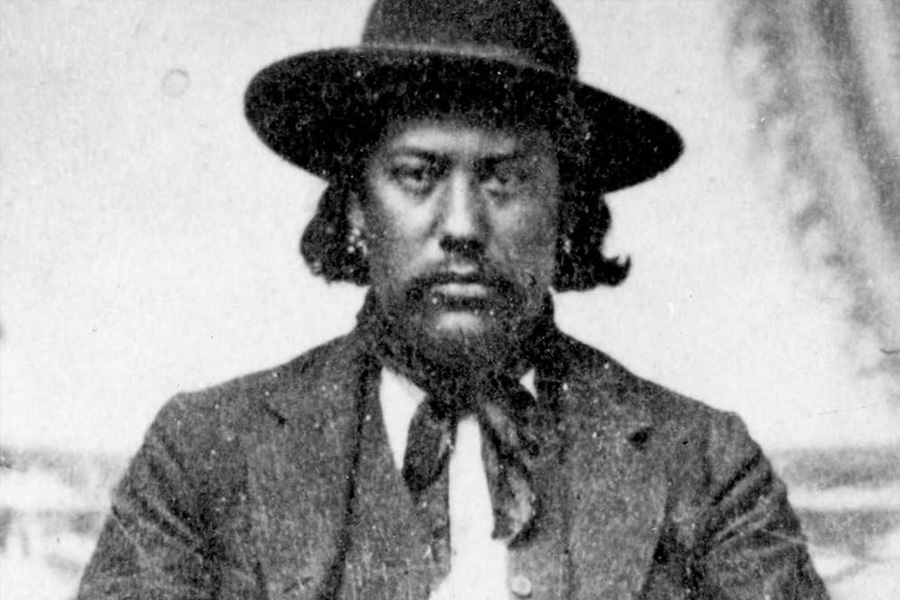
A Name Wrapped in Family, Land, and Memory
Hiram Thorpe has no neat biography. I imagine a frontier life with horses, land, family, and raw edges. The legacy of one of America’s most famous athletic families is rooted in Native and mixed-heritage Oklahoma history. Hiram was not a stadium star or headliner. He was closer to the earth, river, cabin, and horse pasture. His life develops there.
Hiram Thorpe, born about 1852, died in 1904. He experienced a world where stamina, skill, and instinct determined survival. He hunts. Horses were traded. Working the land. He raised children in a difficult home. He lives like an aged wooden pole.
Hiram’s life and family line are notable. He was the father of legendary Native athlete Jim Thorpe. Marriages, children, grandchildren, and great-grandchildren are linked to a name that endures.
Hiram Thorpe’s Early Life and Identity
Hiram’s early years are not documented with the smooth detail that modern biographies often demand. Instead, he appears in historical memory as a man tied to Sac and Fox life, Kansas roots, and the later Oklahoma frontier. His identity belongs to a period when family lines crossed Native, European, and settler worlds, often without clean borders. That complexity is part of the story.
I think of Hiram as a man shaped by movement. The records place him in Kansas and later in what became Oklahoma, in a region where people were pushed, gathered, relocated, and remade. His life was not ornamental. It was practical, muscular, and rooted in daily work. He was known as a hunter and horseman. He understood animals, distance, weather, and terrain. Those are not small gifts. On the frontier, they were survival tools.
Some family accounts describe him as physically strong and unusually active. He is remembered as a runner, swimmer, wrestler, and all-around athlete in the rough, natural sense of the word. That athletic spirit seems to have passed into the family line, especially in Jim Thorpe, whose gifts later became famous across the world.
Charlotte Vieux and the Family Home
Charlotte Vieux stands at the center of Hiram’s family life. She is the most consistently named spouse in the family history, and through her, the home life around Hiram becomes easier to picture. Together they formed the household that raised Jim Thorpe and several other children. Their home was not grand. It was likely a hard-working domestic world shaped by land, livestock, and crowded family life.
I imagine the household as a place full of motion. Children coming and going. Horses nearby. Daily labor stretching from morning into evening. A one-room cabin in some accounts. Dust, weather, silence, voices. This was not a decorative family portrait. It was a working family, and every member seems to have had a role in making the household endure.
Charlotte’s place in the family matters because she links Hiram to the next generation in a direct and lasting way. Through her, the line reaches Jim Thorpe, and through Jim it stretches much further. She is the bridge between Hiram’s frontier world and the public memory that would later attach itself to the name Thorpe.
Children and Descendants
The most widely recognized child of Hiram Thorpe is Jim Thorpe, born in 1888. Jim became a star athlete, but before that he was one of a large family of children raised in a difficult and shifting environment. Hiram and Charlotte are associated with children named Minnie, Frank, George, Charlie, Jim, Mary, Adeline, and Edward. Some family records list additional names, but these are the most repeated and the most useful for understanding the shape of the household.
Jim’s twin brother, Charlie, is especially important because he helps show that this family story was not centered on one prodigy alone. There were two boys growing up together, not just one. That detail changes the emotional shape of the household. It suggests shared childhood, shared loss, shared memory.
Beyond Jim, the line continues through later generations. Jim Thorpe Jr. appears as a grandson in the family record. Grace Thorpe stands out as one of the more visible descendants, carrying the family name into a later era of activism and public engagement. Charlotte Thorpe and Dagmar Thorpe also appear in the line, showing that the family branch did not stop with Jim’s fame. It kept growing like roots under winter ground, hidden but alive.
When I look at this family tree, I see more than a list of names. I see inheritance in motion. A man like Hiram does not become famous in the modern sense, but his descendants carry the weight of his choices, his labor, and his place in the family web.
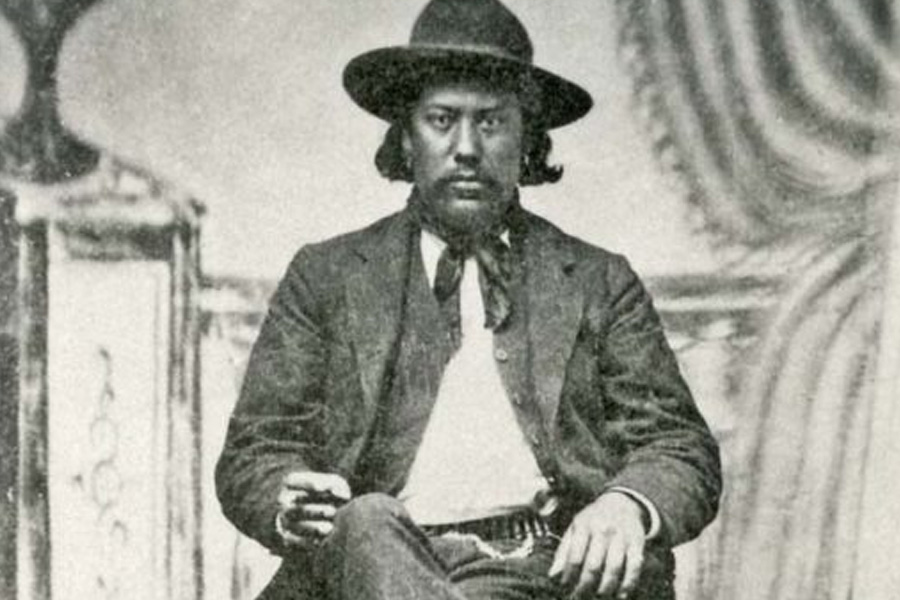
Work, Reputation, and Daily Life
Hiram Thorpe worked with horses, hunting, ranching, and informal trade. He was related to movement economy. Horses were precious. Land mattered. Trail and animal behavior knowledge mattered. He lived in a society where money and survival were often linked, even when money was questionable.
His reputation was tougher. Some accounts link him to bootlegging and anarchy. The general impression is that Hiram was not a polished municipal figure. Frontier men were generally remembered differently. One provider may cause difficulty for another. One hunter may be another lawbreaker.
Tension helps Hiram feel genuine. He did not become a saintly ancestor. He seems complicated in a complicated time. It provides family history texture. Keeps the story from becoming a postcard.
Hiram Thorpe in the Larger Family Story
Hiram’s importance grows when I place him inside the larger Thorpe family story. He is not merely the father of Jim Thorpe. He is the beginning of a lineage that carries identity, memory, and cultural significance through multiple generations. His family includes names that recur across tribal memory, genealogical records, and public history.
The Thorpe family story is full of motion and overlap. It includes Native identity, allotment-era Oklahoma life, athletic greatness, family loss, and later public recognition. Hiram sits near the root of that whole structure. If Jim was the bright flame that many people saw, Hiram was the wood beneath it. Not visible in the same way, but necessary.
There is something almost geological about family history like this. One generation presses into the next. The shape of the past remains, even after the people are gone. Hiram’s life, though imperfectly documented, still casts a shadow forward. That shadow falls on Jim, on Charlie, on Grace, on Charlotte, on Dagmar, and on the wider family memory that continues to be retold.
FAQ
Who was Hiram Thorpe?
Hiram Thorpe was a Native and frontier-era family figure best known as the father of Jim Thorpe. He lived in the mid to late 1800s and died in 1904. His life was tied to farming, horses, hunting, and the everyday labor of a large family.
Who was Hiram Thorpe’s spouse?
The most consistently named spouse is Charlotte Vieux. She is the central maternal figure in the family line and the mother associated with Jim Thorpe and several other children.
How many children did Hiram Thorpe have?
The family record most often connects Hiram and Charlotte to eight children: Minnie, Frank, George, Charlie, Jim, Mary, Adeline, and Edward. Some additional names appear in genealogical records, but these are the strongest recurring ones.
Was Jim Thorpe Hiram Thorpe’s son?
Yes. Jim Thorpe is the best-known child of Hiram Thorpe. Jim’s life later became famous in American sports history, but his family background began in a much quieter world.
Why is Hiram Thorpe still remembered?
He is remembered because he stands at the center of a significant family line. His life connects Native history, Oklahoma history, and the ancestry of Jim Thorpe. He is also remembered as a man whose daily life reflected the strength and strain of frontier family survival.
How To Investigate A Neighbourhood Before You Call It Home
Making Westfield Cleanup Less Chaotic With The Right Dumpster