A quiet architect in a family that built more than buildings
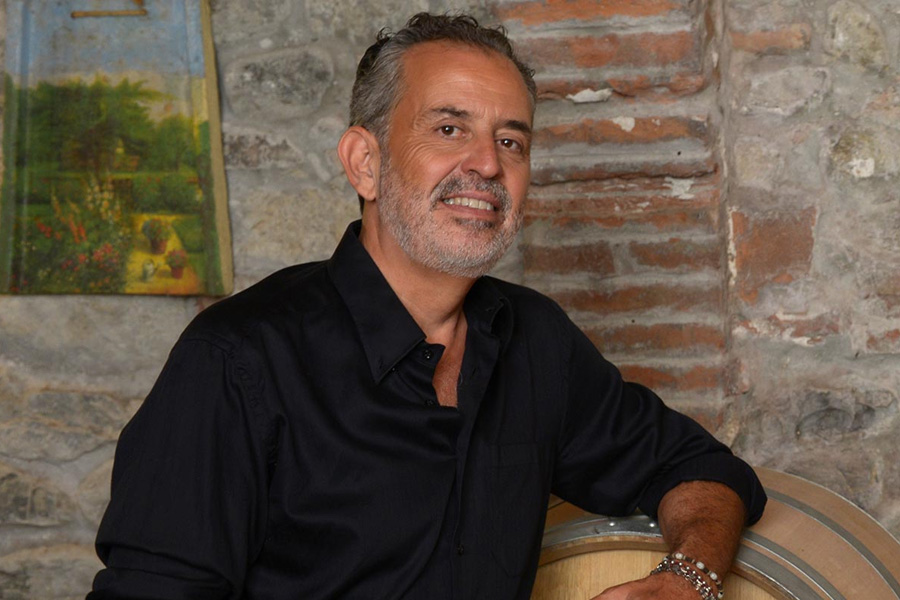
I view Alberto Bocelli as shaped by inheritance but not constrained by it. Though he shares a famous surname, his art provides it structure, order, and weight. Part architect, part steward, part connector. Alberto binds a family saga of land, work, music, and hospitality.
Born into the Bocelli family of Tuscany, Alberto grew up in an environment where dirt, house, workshop, and vineyard spoke the same language. Alessandro Bocelli, his father, continued the family’s farming. With her practicality, his mother Edi Bocelli maintained continuity. His brother Andrea Bocelli was the family’s most famous voice, but Alberto was its quiet motor. He didn’t live for stage lights. It was built on foundations.
That distinction counts. Architect and business executive Alberto Bocelli combines design with family business. In a traditional family, such combination is potent. Architecture goes beyond walls and roofs. It involves land reading, proportion, and memory shaping. Alberto appears to have done it.
The Bocelli family: roots, branches, and shared direction
The Bocelli family story begins long before the modern public attention that surrounds Andrea Bocelli. The family’s history is tied to land ownership, farming, machinery, and eventually wine and hospitality. That long arc matters because it gives Alberto’s life context. He is not a standalone figure. He is one branch on a deep tree.
Alessandro Bocelli, his father, helped expand the family’s agricultural path. Edi Bocelli, his mother, is part of the emotional and practical backbone of that story. Together, they created a home where work was not abstract. It was visible, seasonal, and rooted in place. That kind of upbringing leaves a mark. It often produces people who understand that legacy is something you maintain, not something you merely inherit.
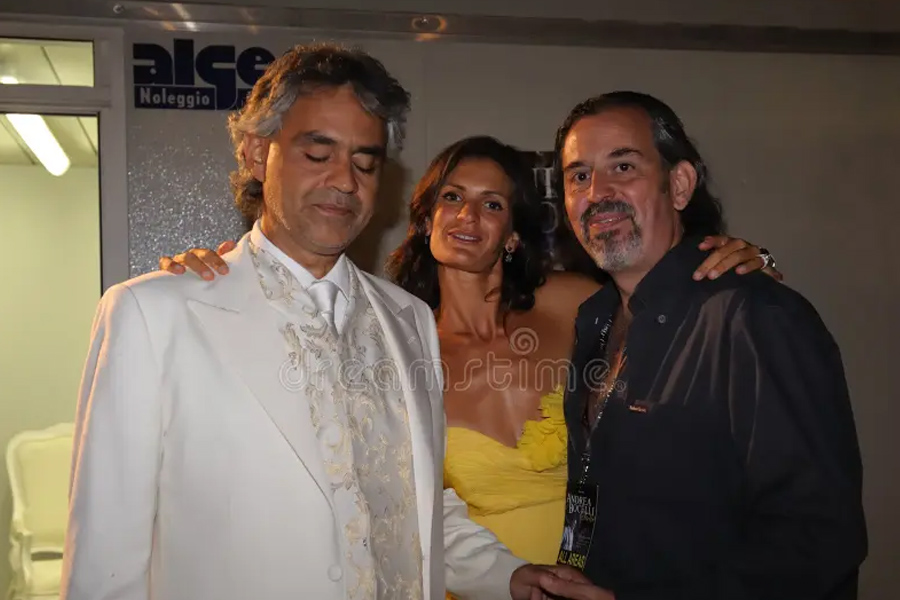
Andrea Bocelli, Alberto’s brother, became globally famous, but the family narrative never reduces Alberto to being “the brother of.” He is instead a collaborator in the larger Bocelli inheritance. The two brothers are linked not only by blood but by a shared responsibility to family land and family identity. In the public family story, Alberto appears as a trusted sibling, a working partner, and a person with his own professional direction.
Cinzia, Alberto’s wife, is also part of that story. She is presented as a supportive partner in family and farm life, someone who helped extend the household into the larger working world of vineyards, hospitality, and family presentation. In families like this, marriage is not simply private. It becomes part of the architecture of continuity.
Their children add another generation to the picture. Alessio, Maddalena, and Rachele are the names that appear most often in connection with Alberto’s immediate family. I see them as the living extension of a multi generation Tuscan story. A family like this does not sit still. It grows outward like a vine finding new wire, new light, and new space.
Career, work, and the shape of public achievement
Alberto Bocelli’s career is best understood as a layered one. He is not a celebrity in the conventional sense. His achievements are often embedded in places rather than headlines. That does not make them smaller. It makes them more durable.
One of the clearest parts of his professional life is architecture. This matters because architecture gives form to experience. A good architect does not merely design a building. He helps decide how people move, gather, rest, and remember. In a family estate like the Bocelli properties, that skill becomes especially important. The buildings are not neutral. They carry identity. They hold history in brick, stone, and proportion.
His role in Teatro del Silenzio stands out as a major accomplishment. The theater is not just a performance venue. It is a landscape turned into an event space, a place where art and geography meet. Alberto is associated with the site’s adaptation and development, and that makes sense. A project like that demands someone who can think like both an architect and a custodian. It is a rare thing to transform a hill, an open space, or a rural setting into something that welcomes thousands while still keeping its spirit intact. That is not construction alone. That is choreography.
He is also connected to the family’s wine enterprise and hospitality ventures. The Bocelli family business has grown into an ecosystem of wine, food, visitor experiences, and storytelling. Alberto appears as one of the people helping maintain that ecosystem. In modern family businesses, the real work often lies in continuity. Keeping quality stable. Making the story legible. Protecting the character while allowing growth. Alberto seems to work exactly in that middle ground.
There is also a practical kind of achievement in being present. The family history shows Alberto not as a passive heir but as a participant. He helps shape places where the Bocelli name is lived, tasted, and visited. That is a different kind of success from the usual public ladder. It is slower, more rooted, and sometimes more lasting.
A timeline that reads like a family map
I see Alberto Bocelli’s life as a map with dates. Since the 19th century, the Bocelli family has been involved in agriculture. By the time Alessandro and Edi had children, those roots were a live inheritance.
Alberto’s generation grew up with a local and global family identity. Andrea’s success made the surname famous worldwide, but Alberto’s life was grounded. He worked in architecture, estate development, hospitality, and family administration.
Theaters, wineries, and visitor spaces joined the Bocelli family tale in the 2000s and beyond. Alberto’s work gave the name tangible form. If Andrea gave the family a voice, Alberto offered it walls, roads, rooms, and gathering spots. The contrast is stunning. One brother protrudes. Another supports inwardness.
Why Alberto Bocelli matters in the family story
Alberto Bocelli matters because families like the Bocellis are not held together by fame alone. They are held together by roles. Andrea sings. Alberto shapes. Edi preserves. Alessandro extended the line. Cinzia supports the modern household. The children carry the future. Each part matters.
I find Alberto especially interesting because he represents a kind of public life that is not performative. He is visible, but not noisy. Significant, but not excessive. He seems to work in the spaces where heritage becomes usable. That is a delicate task. It requires restraint. It requires taste. It requires patience, like a winemaker waiting for a season to finish its slow arithmetic.
His biography is also a reminder that family legacy is rarely simple. It is a braid of work, affection, obligation, and adaptation. Alberto Bocelli’s life sits right inside that braid. He is not only part of the Bocelli family. He is one of the people who helps the family remain itself.
FAQ
Who is Alberto Bocelli?
Alberto Bocelli is an Italian architect and family business figure from the Bocelli family of Tuscany. He is widely described as Andrea Bocelli’s brother and as someone involved in the family’s land, wine, and hospitality work.
Who are Alberto Bocelli’s closest family members?
His closest family members include his parents, Alessandro Bocelli and Edi Bocelli, his brother Andrea Bocelli, his wife Cinzia, and their children Alessio, Maddalena, and Rachele.
What is Alberto Bocelli known for professionally?
He is known for architecture, estate and business management, and his role in projects tied to the Bocelli family’s properties, including Teatro del Silenzio and the wider family hospitality and wine world.
How is Alberto Bocelli connected to Teatro del Silenzio?
He is associated with the adaptation and development of Teatro del Silenzio, a venue that blends landscape, design, and performance. His role reflects architectural judgment and long term stewardship.
What role does Alberto Bocelli play in the Bocelli family business?
He appears as a key family operator who helps shape the wine, hospitality, and property side of the Bocelli legacy. His work helps turn heritage into places people can visit, taste, and experience.
Does Alberto Bocelli have children?
Yes. The family material identifies three children connected to Alberto Bocelli: Alessio, Maddalena, and Rachele.
Why is Alberto Bocelli less publicly known than Andrea Bocelli?
Andrea Bocelli is a world famous singer, while Alberto’s work is rooted in architecture, family enterprise, and local stewardship. His influence is substantial, but it is quieter and more closely tied to place than to performance.
How Contractors Become The First Call In Their Service Area
Making Room For Real Life With An Essex Home Extension
Park City Comes Alive Through Art Music And Mountain Culture