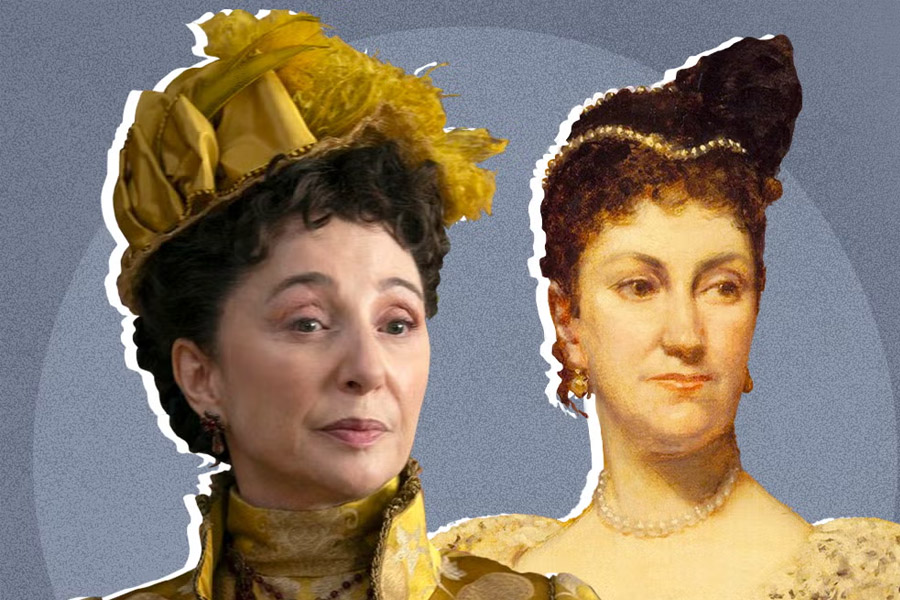
Early Life in an Astor Household
When I look at Caroline Astor Drayton, I see a woman born into one of the most glittering family constellations of late 19th century America. She was born on 26 October 1880 in New York City, inside a world shaped by inherited wealth, social rank, and the sharp, polished rituals of elite society. Her life began like a candle in a ballroom, bright from the start, but always under the gaze of history.
Caroline came from the Astor line through her mother, Charlotte Augusta Astor, and from the Drayton line through her father, J. Coleman Drayton. That marriage linked two different kinds of prestige. On one side stood the commanding Astor fortune, the kind that could set a room in motion before a word was spoken. On the other side stood the Drayton family, with legal, social, and political connections that also carried weight. Caroline was not simply born wealthy. She was born into a family ecosystem, where names, manners, and alliances mattered as much as money.
Her maternal grandparents were William Backhouse Astor Jr. and Caroline Schermerhorn Astor, two names that ring through Gilded Age history like church bells. Her paternal grandparents were Henry Edward Drayton and Sarah Hand Coleman. These four figures formed the frame around her childhood, and the frame was ornate. She stood inside a house of lineage, where every branch of the family tree seemed to cast a long and polished shadow.
The Family Web Around Caroline Astor Drayton
Caroline’s family life was not simple, but it was rich in connections, branches, and historic gravity. I find that the best way to understand her is to see the people around her clearly.
| Family Member | Relationship to Caroline Astor Drayton | Notes |
|---|---|---|
| Charlotte Augusta Astor | Mother | Daughter of William Backhouse Astor Jr. and Caroline Schermerhorn Astor |
| J. Coleman Drayton | Father | Lawyer and socialite from the Drayton family |
| William Backhouse Astor Jr. | Maternal grandfather | Key figure in the Astor fortune |
| Caroline Schermerhorn Astor | Maternal grandmother | Icon of New York society |
| Henry Edward Drayton | Paternal grandfather | Part of the Drayton family line |
| Sarah Hand Coleman Drayton | Paternal grandmother | Part of the Drayton family line |
| Henry Coleman Drayton | Brother | Married Mary Constance Knower |
| William Astor Drayton | Brother | Later known as a gold mining expert |
| Alida Livingston Drayton | Sister | Died young |
| William Phillips | Husband | Diplomat and later a major public figure |
| Miriam Drayton Phillips | Daughter | Died in infancy |
| Beatrice Schermerhorn Phillips | Daughter | Married Rear Admiral Elliott Bowman Strauss |
| William Phillips Jr. | Son | Married Barbara Holbrook |
| Drayton Phillips | Son | Married Evelyn Gardiner |
| Christopher Hallowell Phillips | Son | Became a diplomat and ambassador |
| Anne Caroline Phillips | Daughter | Married John Winslow Bryant |
Her siblings reveal the family’s broad spread across generations. Henry Coleman Drayton, her brother, carried the family name into his own marriage to Mary Constance Knower. William Astor Drayton followed a different path and became known as a gold mining expert, which gives his life a more rugged contour than the drawing rooms of his birth might suggest. Alida Livingston Drayton, the younger sister, died in childhood. That detail adds a quiet sorrow to the family record, a reminder that even privileged houses were not spared loss.
Marriage to William Phillips and a Life in Public View
In 1910, Caroline married William Phillips, a man whose life unfolded in diplomacy rather than society columns. He rose through the foreign service and held senior posts representing the United States. Their marriage linked old New York wealth to international public service. It was the sort of union that felt like a bridge between two worlds, one world made of inherited pedigree, the other of government, travel, and statecraft.
Their household became a family of six children, with one child, Miriam Drayton Phillips, dying in infancy. That number matters because it shows both abundance and vulnerability. The Phillips home was not merely a formal diplomatic address. It was a living, crowded, changing household, full of children who later built significant lives of their own.
Beatrice Schermerhorn Phillips carried the old family naming tradition forward and married Rear Admiral Elliott Bowman Strauss. William Phillips Jr. married Barbara Holbrook. Drayton Phillips married Evelyn Gardiner. Christopher Hallowell Phillips entered diplomatic life and eventually became ambassador to Brunei. Anne Caroline Phillips married John Winslow Bryant. In a way, the family spreads outward like roots seeking new soil, each child extending the lineage into a different territory.
Career, Duties, and Quiet Achievement
Caroline Astor Drayton left no modern career, yet she lived with purpose. Her accomplishments were social, documentary, and familial. Her diaries record decades of intimate observation. That kind of job has its own energy despite not having a uniform or desk plaque. Caroline’s diary mirrored affluent American life over decades.
I consider her attentive, not lazy. While recording, she moved between high society, diplomacy, and family. Private memories become historical material with that record. Her extensive paper trail, from the 1890s to the 1970s, indicates a woman linked to key public leaders and historical events. She was close to the Roosevelts, connected to elite networks, and in a milieu where personal relationships were political.
She relied on family fortune and marriage, not salaries. She was wealthy due to the Astor fortune and her father’s estate. That riches affected her lifestyle, travel, and child rearing. But wealth doesn’t make life fascinating. How someone uses time, memories, and relationships shapes the outline. Caroline left a family map and documentary with them.
Legacy and Personality in Historical Memory
I remember a woman standing in the middle of a web without loosing her line. She was a granddaughter of Caroline Schermerhorn Astor, daughter of Charlotte Augusta Astor, wife of William Phillips, and mother of six. Only because her life was full of links is that statement long. Each relationship contributed strands until it resembled a colorful, historical rug.
She lived from 1880 to 1965, experiencing the late Gilded Age, Progressive Era, two world wars, and early Cold War. That implies she was multi-aged. She crossed many. She observed the American elite evolve from railroad and mansion culture to managerial and worldwide. She participated in the transformation through marriage, family, and paperwork.
FAQ
Who was Caroline Astor Drayton?
Caroline Astor Drayton was an American socialite, heiress, wife of diplomat William Phillips, mother of six children, and a diarist born on 26 October 1880 in New York City. She belonged to the Astor and Drayton families, two names that carried strong social weight in her era.
Who were her parents and grandparents?
Her parents were Charlotte Augusta Astor and J. Coleman Drayton. Her maternal grandparents were William Backhouse Astor Jr. and Caroline Schermerhorn Astor. Her paternal grandparents were Henry Edward Drayton and Sarah Hand Coleman Drayton.
Who were her siblings?
She had three known siblings: Henry Coleman Drayton, William Astor Drayton, and Alida Livingston Drayton. Henry and William lived into adulthood, while Alida died young.
Who was her husband?
Her husband was William Phillips, a diplomat who later held important posts in United States foreign service. Their marriage brought together elite New York society and the world of diplomacy.
How many children did she have?
She had six children, though one, Miriam Drayton Phillips, died in infancy. The surviving children were Beatrice Schermerhorn Phillips, William Phillips Jr., Drayton Phillips, Christopher Hallowell Phillips, and Anne Caroline Phillips.
What was her main achievement?
Her main historical achievement was preserving a long personal record through diaries and papers, while also helping shape a prominent diplomatic family. Her life connected the Astors, the Draytons, and the Phillips family across several generations.
Why does Caroline Astor Drayton matter today?
She matters because her life offers a close view of elite American family structure, social power, and the way private papers can become historical testimony. Her story is also a map of inheritance, marriage, loss, and continuity across more than eight decades.