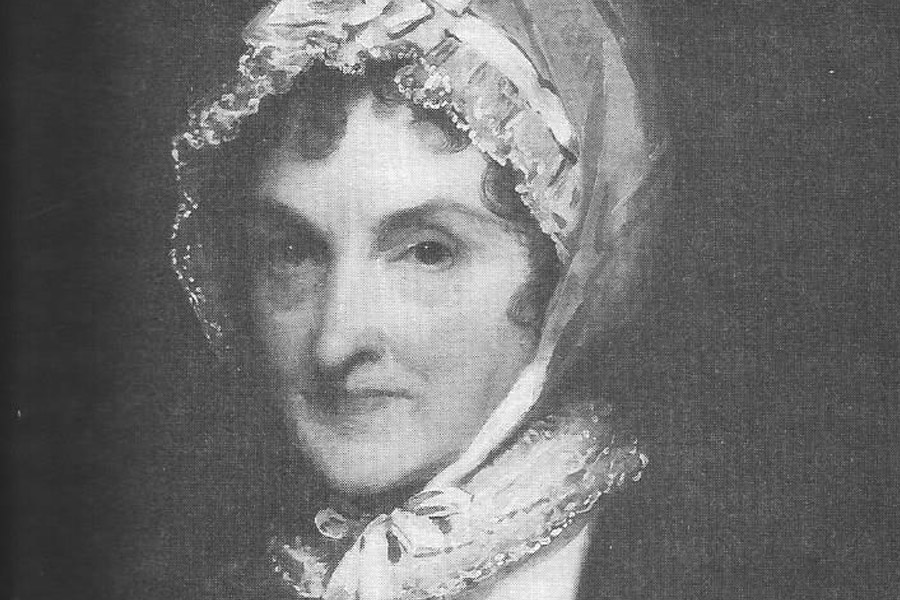
I have always marveled at the quiet women of early America whose steady hands shaped giants. Elizabeth Quincy Smith stands among them. Born into a world of Puritan roots and rising colonial tensions she lived from 1721 to 1775 as the devoted wife of a minister and mother whose children and grandchildren would ignite the flame of independence. Her life wove together faith family and community like threads in a sturdy tapestry that still drapes over the Adams presidential legacy today.
Roots Planted Deep in Braintree Soil
Elizabeth Quincy arrived on December 17 1721 in Braintree Massachusetts now part of Quincy. Her father Colonel John Quincy served as Speaker of the Massachusetts House and a member of the colonial Governor’s Council. He owned the grand Mount Wollaston estate and carried the weight of political influence. Her mother Elizabeth Norton Quincy descended from Reverend John Norton the founding pastor of Old Ship Church in Hingham. This union blended military might with ministerial depth.
I picture young Elizabeth growing up amid rolling fields and salt air. The Quincy name carried prestige yet she learned early to wear it lightly. No pride in ancestry defined her. Instead she drew quiet dignity from Christian faith. By her teens she had absorbed lessons in prudence and charity that would guide every chapter ahead.
A Union Forged in Faith and Weymouth Life
Around 1740 to 1742 Elizabeth married Reverend William Smith. He had graduated from Harvard in 1725 and took charge of the North Parish Congregational Church in Weymouth in 1734. Their home became a beacon of liberal Congregationalism where reason and morality lit the daily path.
The parsonage bustled with books in English and French. Elizabeth managed the household with thrift and warmth. She bore four children there and turned the modest space into a cradle of intellect and virtue. Her husband preached for over forty years and she stood as his unwavering partner through illness and revolutionary whispers.
Raising Daughters Who Changed History
Four children filled the Smith household and each one carried forward her values in striking ways. Mary Smith arrived in 1741 and later married Richard Cranch forging ties that echoed through family letters. Abigail Smith followed on November 22 1744. She grew into the brilliant Abigail Adams wife of President John Adams and mother of President John Quincy Adams. Elizabeth taught her sickly daughter to read write and cipher drawing from the family library. Those lessons fueled Abigail’s sharp mind and advocacy for women’s education.
A son William Smith came around 1746. Though less documented in public records he formed part of the tight sibling circle. The youngest Elizabeth Smith later known as Betsy married first Reverend Shaw and then Peabody completing the quartet. I see Elizabeth Quincy Smith as the gardener who planted seeds of curiosity and kindness in each child. Her influence bloomed far beyond Weymouth.
Grandchildren and the Adams Presidential Branch
The family tree reached the top of American power through Abigail. Sixth U.S. President John Quincy Adams was born in 1767. Latecomer Thomas Boylston Adams continued the family name. Charles Adams and others completed the immediate grandchildren.
Later, Elizabeth Quincy Smith was great-grandmother to George Washington Adams, John Adams Smith, Abigail Louisa Smith, Caroline Amelia Smith De Windt, Joseph Harrod Adams, and Elizabeth Coombs Adams. She is directly connected to the early republic through decades of contacts. Presidents and extended family like Abigail Adams Smith and Susanna Adams are affected by her legacy. One woman, four children, several grandchildren, and at least six great-grandchildren who shaped politics, law, and letters.
To clarify these bonds here is a simple table of core family members.
| Relation | Name | Key Details |
|---|---|---|
| Father | Colonel John Quincy | 1689 to 1767 Speaker of Massachusetts House |
| Mother | Elizabeth Norton Quincy | 1696 to 1769 linked to Puritan pastors |
| Husband | Reverend William Smith | 1707 to 1783 Harvard class of 1725 pastor |
| Daughter | Mary Smith Cranch | Born 1741 married Richard Cranch |
| Daughter | Abigail Smith Adams | Born 1744 married John Adams |
| Son | William Smith | Born around 1746 |
| Daughter | Elizabeth Smith Shaw Peabody | Born around 1750 married twice |
| Grandson | John Quincy Adams | Born 1767 sixth U.S. President |
| Grandson | Thomas Boylston Adams | Key Adams family figure |
This table captures only the most direct lines yet it reveals how one household in Weymouth seeded an entire dynasty.
Community Service and the Minister’s Wife Role
Elizabeth Quincy Smith held no formal career in the modern sense. Colonial women rarely did. Yet her daily work rivaled any profession in impact. As mistress of the parsonage she visited the sick aided the poor and welcomed strangers. She employed industrious neighbors in tasks like clothing production and promoted peace among parishioners without stirring disputes.
Her finances stayed modest but comfortable thanks to Quincy land holdings and her husband’s steady ministerial salary. The family library and hospitality reflected prudent economy rather than showy wealth. What strikes me most is her metaphor of quiet service: she acted like a steady river nourishing the soil around her without seeking the spotlight. At her death on October 1 1775 at age fifty three she left behind a reputation for universal love and esteem.
An Extended Timeline That Spans Colonial Change
I follow her around specific dates to experience her time. She was born and christened December 17, 1721. In 1740–1742, she marries and moves to Weymouth. 1741 has Mary, 1744 Abigail. Son William and daughter Elizabeth arrive around 1746 and 1750.
Her father dies 1767, her mother 1769. Her father Reverend William Smith marries Abigail to John Adams in 1764. Elizabeth prioritizes home and parish despite the upheaval. On October 1, 1775, she dies of smallpox or dysentery. About 1783, her husband outlives her by eight years.
Her legacy continues on through Adams family communications and Quincy Massachusetts’ name after her father. She witnessed the transition from colony to nation from 1721 to 1775, but her legacy is her family.
Lesser Known Depths From Family Letters
Beyond the public record I find richer hues in preserved writings. Elizabeth faced long painful illnesses with fortitude. Her final words echoed faith: a plea for divine reception. She visited the distressed without regard for status and taught her daughters through example rather than lectures. These details paint her not as a distant ancestor but as a vivid woman whose charity extended to the friendless and whose peacemaking kept the parish harmonious.
Her life spanned fifty three years yet its ripples reach two hundred fifty years later. I often reflect on how one minister’s wife in a small Massachusetts town could anchor such historic waves.
FAQ
Who exactly was Elizabeth Quincy Smith in colonial America?
Elizabeth Quincy Smith lived from 1721 to 1775 as the wife of Reverend William Smith and mother to four children in Weymouth Massachusetts. She came from the prominent Quincy family and focused her days on faith household management and community aid. Her influence shines brightest through her daughter Abigail who became First Lady and shaped two presidents.
How did her family connections reach the White House?
Through daughter Abigail Smith Adams Elizabeth Quincy Smith became grandmother to President John Quincy Adams and great grandmother to several Adams descendants including George Washington Adams and Caroline Amelia Smith De Windt. The line runs from her four children in the 1740s straight into the 19th century executive branch touching at least six documented great grandchildren.
What daily work defined her life without a modern career?
She managed the parsonage visited the sick employed the poor in productive tasks and fostered peace in the church. These efforts combined with prudent finances from family land and her husband’s salary created a stable home filled with books and moral teaching. Her achievements lie in raising educated daughters and earning lasting respect in Weymouth.
Did she experience the American Revolution firsthand?
She died on October 1 1775 just as fighting erupted so she witnessed early tensions but not full independence. Her husband supported the cause and the family letters from those years reflect the era’s strain. Her steady presence prepared her children to thrive amid change.
Why does her story matter today?
In an age that celebrates loud voices I find power in her quiet example. One woman born in 1721 taught values that fueled a dynasty of leaders. Her fifty three years of service remind us that family faith and community form the unseen foundation of history.
Are there any recent mentions of her in modern discussions?
As a figure from 1775 she appears mainly in historical timelines genealogy sites and Adams family studies. No current news or social media buzz surrounds her personal story yet scholars and history enthusiasts continue to explore her role in shaping early America.