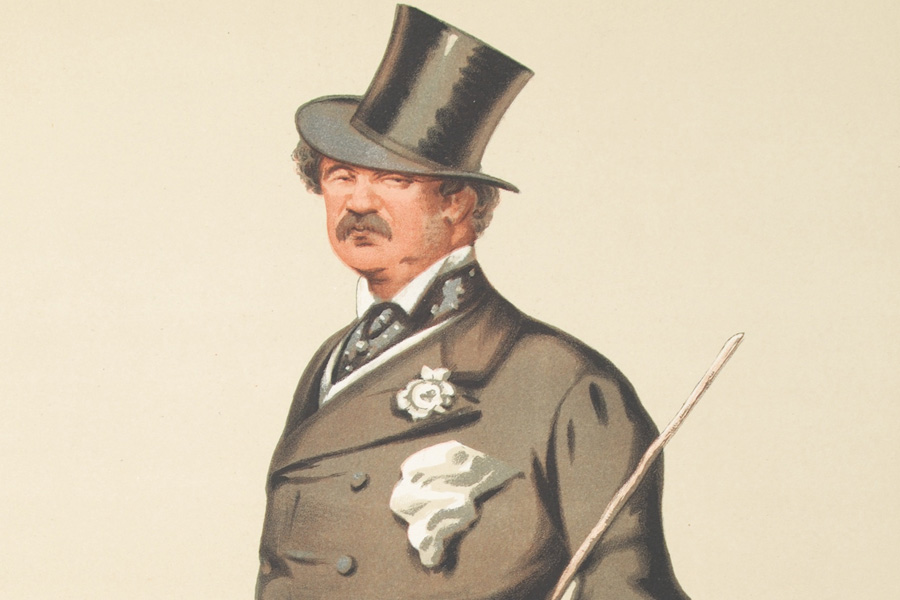
A life built inside Britain’s highest circles
I see Lord Alfred Paget as one of those 19th century figures who moved through history like a polished ship through calm water: steady, visible, and always near power. Born in June 1816 in London, he belonged to one of the most influential aristocratic families in Britain. He lived long enough to serve under Queen Victoria across decades of change, and he died in 1888 after a life shaped by politics, military rank, court service, and family obligation.
He was the son of Henry Paget, the 1st Marquess of Anglesey, and Charlotte Cadogan, daughter of Charles Cadogan, 1st Earl Cadogan. That alone placed him at the center of a powerful network of military honors, inherited rank, and political access. From the beginning, his life was threaded into the fabric of the British elite. He was not merely born into privilege. He was born into a system of alliances, titles, and expectations, like a key cut before he ever touched the lock.
His parents and the world they created
His father, Henry Paget, was a celebrated cavalry commander and one of the most famous military men of his age. His mother, Charlotte Cadogan, brought another aristocratic line into the family, linking the Pagets to the Cadogans. Their marriage created a household with enormous reach. Alfred grew up in a family where rank was normal, public duty was expected, and service was part of identity.
This background shaped him deeply. He did not rise from obscurity. He inherited a stage.
His half siblings and full siblings formed a wide and interlaced family web. From his father’s first marriage came older half siblings such as Henry Paget, 2nd Marquess of Anglesey, Lady Caroline Paget, Lady Jane Paget, Lady Georgina Paget, Lady Augusta Paget, Lord William Paget, and Lady Agnes Paget. From his mother’s earlier marriage came half siblings from the Wellesley line, including Henry Wellesley, later Earl Cowley, and Charlotte Wellesley, among others. From his parents’ marriage came Alfred’s full siblings, including Lord Clarence Paget, Lord George Paget, Lady Emily Paget, Lady Mary Paget, and Lady Adelaide Paget.
It was a family tree with many thick branches, and each branch reached toward some other corner of public life. Military service, Parliament, court circles, and elite marriage ties all appear again and again.
Marriage to Cecilia Wyndham
In 1847, Lord Alfred Paget married Cecilia Wyndham, the daughter of George Thomas Wyndham of Cromer Hall in Norfolk. Their marriage joined aristocratic rank with landed wealth. Cecilia was not a decorative partner in the background. She became the center of a large household and the mother of a very large family.
I think it is impossible to understand Lord Alfred without seeing Cecilia beside him. A man with public office and political commitments needs more than standing and title at home. He needs a domestic structure strong enough to hold the weight of it all. Cecilia appears to have filled that role with great force.
Together they had 14 children, and this alone gives the Paget story a rhythm of abundance. Their children included Victoria Alexandrina Paget, Evelyn Cecilia Paget, Sir Arthur Henry Fitzroy Paget, Alfred Wyndham Paget, George Thomas Cavendish Paget, Gerald Cecil Stewart Paget, Violet Mary Paget, Sydney Augustus Paget, Amy Olivia Paget, Alberta Victoria Paget, Almeric Hugh Paget, Alice Maud Paget, Alexandra Harriet Paget, and Guinevere Eva Paget.
Each child carried the family into a different lane. Arthur entered military life and became a senior officer. George became known for raising Paget’s Horse during the Boer War. Almeric became especially notable, later becoming 1st Baron Queenborough and establishing himself in business and public life. Alexandra married Edward Colebrooke, 1st Baron Colebrooke. Through these children, the Paget name spread like ink across a wide page.
Career in Parliament, court, and uniform
The career of Lord Alfred Paget was multifaceted. He was a Liberal MP for Lichfield from 1837 until 1865, serving 28 years in the Commons. Not a brief cameo. Long time in public life. He discussed army commissions, commercial policy, and police affairs, demonstrating that he was involved in governing rather than just watching.
He held key court positions under Queen Victoria. Chief Equerry and Clerk Marshal were his most notable roles. Positions close the monarch and in royal household machinery. He held it for long periods during Victoria’s middle and later reign, combining ceremonial and administrative duties.
Also important was his military service. He became a lieutenant colonel and honorary general. Part soldier, courtier, politician. That combination was rare but common among his upper classes. In traditional 19th-century clothing, public life typically demanded sword and pen.
Money, property, and the practical side of rank
I find the financial side of his story especially revealing because it shows how aristocratic life depended on more than title. In one recorded estimate, the office of Chief Equerry and Clerk Marshal carried a salary of 1,000 pounds a year in 1857. That does not sound overwhelming by modern standards, but in the context of the era it was a meaningful sum and a sign of the state’s investment in court service.
He also had business interests. He was connected to the Electric Telegraph Company and served as a director of the North Staffordshire Railway Company. These details matter because they show that aristocrats of his generation often stepped into the new machinery of modern Britain. Telegraphs, railways, and finance were not separate from elite life. They were part of it.
After his death, the family’s financial structure continued through trusts and estate administration. His widow and children appear in records connected to property, mortgages, and settlement arrangements. The family did not simply vanish into memory. They remained embedded in the land and in legal paper trails, which is often where wealth quietly lives.
Yachts, social life, and royal connection
Yachting was equally important to Lord Alfred Paget. He was prominent in the Royal Thames Yacht Club and held key positions. In his world, yachts were more than toys. Status, engineering, pleasure, and social range were represented by them. Sail-covered salons floated.
He introduced Edward VII to sailing and racing. He has a texture from that detail. He was more than a crown official. He also influenced the following king’s social practices.
Even after his death, his yachts and maritime life garnered local and historical attention. The story of his yacht, crews, and connections to Rowhedge and Wivenhoe humanizes a life of titles. I remember that even great lives leave traces in little ports and laboring towns.
The family legacy after his death
The Paget family legacy did not stop with Lord Alfred. It expanded. His son Almeric became a peer and industrial figure. His daughter Olive Cecilia Paget later became Lady Baillie, placing the family in another generation of visibility. Other children remained tied to military, social, and aristocratic networks.
That is what makes the family so interesting. It was not a single branch climbing upward. It was a whole canopy. Some children moved into the army, some into marriage alliances, some into peerage and business, and some into the quieter but still significant world of family continuity. The Pagets were not static. They were a moving constellation.
Extended family map
| Family member | Relationship to Lord Alfred Paget | Notable detail |
|---|---|---|
| Henry Paget, 1st Marquess of Anglesey | Father | Famous cavalry commander |
| Charlotte Cadogan | Mother | Daughter of Charles Cadogan |
| Charles Cadogan, 1st Earl Cadogan | Maternal grandfather | Linked the Pagets to another aristocratic line |
| Henry Paget, 1st Earl of Uxbridge | Paternal grandfather | Earlier head of the Paget line |
| Cecilia Wyndham | Wife | Married Lord Alfred in 1847 |
| Arthur Henry Fitzroy Paget | Son | Military officer |
| George Thomas Cavendish Paget | Son | Associated with Paget’s Horse |
| Almeric Hugh Paget | Son | Later became 1st Baron Queenborough |
| Alexandra Harriet Paget | Daughter | Married Edward Colebrooke |
| Olive Cecilia Paget | Granddaughter | Later Lady Baillie |
| Audrey Elizabeth Paget | Great-granddaughter | Part of the later Paget descent |
FAQ
Who was Lord Alfred Paget?
Lord Alfred Paget was a British soldier, politician, courtier, and aristocrat born in 1816. He served as a Liberal MP for Lichfield, held major royal household offices, and belonged to one of the most prominent families of his era.
Who was his wife?
His wife was Cecilia Wyndham, whom he married in 1847. She came from the Wyndham family of Cromer Hall and became the mother of his large family of 14 children.
How many children did he have?
He had 14 children. Several became notable in their own right, especially Sir Arthur Henry Fitzroy Paget, George Thomas Cavendish Paget, Almeric Hugh Paget, and Alexandra Harriet Paget.
What was his most important career role?
His most important court role was Chief Equerry and Clerk Marshal to Queen Victoria. He also served for many years in Parliament and held military rank.
Why does his family matter historically?
His family matters because it connects military leadership, royal service, Parliament, marriage alliances, and later peerage lines. The Pagets were one of those families that did not merely appear in history. They helped shape its social architecture.