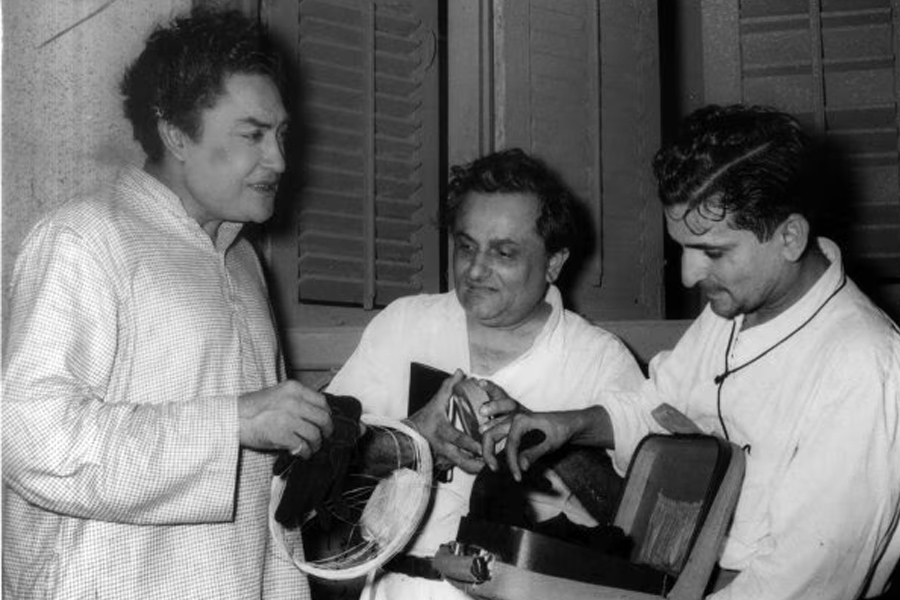
The Roots of a Filmmaking Pioneer
The hidden architects of Indian cinema have long fascinated me. Nanabhai Bhatt is notable. On June 12, 1915, in Porbandar, Gujarat, Yeshwant Bhatt was born during the latter years of British administration. He moved to Mumbai at 15 in 1930. He started as a sound recordist at Prakash Pictures with his older brother. Initial years formed him like clay on a potter wheel. He became main sound recordist and created scripts as Batuk Bhatt. 1942 was his directorial debut. From then on, he directed or produced 70–99 Hindi and Gujarati films until 1988. Low-budget fantasy, mythological, action, and Arabian Nights films were his specialty. He pioneered special effects and trick photography. In 1946, he formed Deepak Pictures. After glaucoma took his sight, he kept telling his boys stories. He died of heart failure in Mumbai at 83 on April 24, 1999. His life is one endless creative reel.
A Family Woven in Two Worlds
Family defined Nanabhai Bhatt as much as his films. He maintained two long term relationships that produced nine children across two households. I find this arrangement both complex and resilient. He provided financial support to everyone and the households coexisted with remarkable harmony according to family accounts. His legal wife Hemlata Bhatt raised her children in one home while his partner Shirin Mohammad Ali nurtured six more in another. Shirin a former child actress from the 1930s adopted Hindu customs outwardly yet remained privately devout. Nanabhai never legally married Shirin but their bond endured until her death. He honored that connection even at the end. His body was taken to her home per his wishes and ashes scattered on her grave. Hemlata outlived him until 18 September 2015 at age 96.
Here is a clear table of his immediate family members and their roles.
| Relation | Name | Key Details |
|---|---|---|
| Legal Spouse | Hemlata Bhatt | Married first raised three children lived to 96 |
| Partner | Shirin Mohammad Ali | Long term companion six children former actress |
| Elder Sibling | Balwant Bhatt | Born 1909 pioneer filmmaker sound recordist |
| Son | Robin Bhatt | Screenwriter filmmaker born around 1946 |
| Son | Parmesh Bhatt | Part of extended family support network |
| Daughter | Mamta Bhatt | Raised in legal household |
| Son | Mahesh Bhatt | Born around 1948 director producer screenwriter |
| Son | Mukesh Bhatt | Producer founded Vishesh Films in 1986 |
| Daughter | Heena Suri | Mother of director Mohit Suri |
| Daughter | Sheila Darshan | Mother of director Dharmesh Darshan |
| Daughter | Purnima Bhasin | Integral to extended family network |
| Daughter | Kumkum Saigal | Completed Shirin household children |
This table captures the sprawling structure. Grandchildren include Alia Bhatt Pooja Bhatt Shaheen Bhatt Rahul Bhatt Mohit Suri Sakshi Bhatt Shail Bhatt and great grandchild Devi Suri. The family tree spreads like roots of a banyan tree anchoring multiple generations in cinema.
Directing Dreams and Building Empires
Nanabhai Bhatt crafted magic on tight budgets. He pioneered the double role twins device in 1942 with the film Muqabala. That technique still echoes in Indian action cinema today. His peak output in the 1950s and 1960s delivered hits such as Kangan in 1959 starring Nirupa Roy and Ashok Kumar. It became his biggest commercial success. Other landmarks include Mr X in 1957 Zimbo Comes to Town in 1960 Lal Qila in 1960 Samson in 1964 and numerous Baghdad and Sinbad series adventures. He collaborated on special effects with Babubhai Mistry creating invisible swordsmen and transformable sets. In the 1970s and 1980s he shifted toward Gujarati devotional films like Gajara Maru in 1981 and Jaya Parvati Vrat in 1982. As producer he backed Kabzaa in 1988. Finance details remain modest by modern standards. He supported two large families comfortably yet operated in the low budget segment. Major wealth arrived later through sons Mahesh and Mukesh via Vishesh Films blockbusters in the 1990s. No public records show lavish assets. Instead his legacy rests in influence. He defined post World War II B movie genres and inspired effects driven filmmaking. Nine children four sons and five daughters carried the torch forward.
An Extended Journey Through Time
I traced his life across decades and saw consistent growth. The following milestones have dates and numbers where available. Porbandar-born 12 June 1915. Moved to Mumbai 1930. Relationship with Shirin began in 1939. Was primary sound recordist and scriptwriter 1941–1942. The 1942 Muqabala co-director introduced the twins device. Founded Deepak Pictures 1946. 1949 Veer Ghatotkach release. Released 1959 blockbuster Kangan. Made Zimbo and Samson in 1964. In 1981, directed Gujarati devotional Gajara Maru. Completed 1982 Jaya Parvati Vrat. Assisted Kabzaa in 1988. Son Mahesh released Zakhm in 1998, citing Shirin. Died April 24, 1999. After 1999, grandchildren Alia Bhatt and Mohit Suri joined the family. That chronology covers 84 years of constantly moving sound rooms to director chairs.
Echoes in Today’s Spotlight
Nanabhai Bhatt left the stage in 1999 yet his name surfaces regularly in 2024 to 2026. Tributes appear on birth and death anniversaries in old film groups. Discussions on social media link him to Alia Bhatt heritage and the mixed Hindu Muslim background. Occasional posts on X and Instagram reference family secrets or unity narratives. Lesser known Gujarati cinema blogs and forums share anecdotes about his generous pay to animal actors and innovative trick photography. No major scandals emerge. Instead mentions celebrate his role as patriarch of a dynasty that includes directors producers and actors across three generations. The whispers keep his memory alive in digital corners.
FAQ
Who was Nanabhai Bhatt and why does he matter in Indian cinema?
Nanabhai Bhatt was a director producer and screenwriter born on 12 June 1915 who shaped low budget fantasy and mythological films for nearly five decades. He matters because he pioneered techniques like the double role device and special effects that influenced countless later productions. His work bridged stunt cinema and devotional stories while building a family empire that continues today.
How many children did Nanabhai Bhatt have and who were they?
He had nine children in total. From his partner Shirin came Mahesh Bhatt Mukesh Bhatt Heena Suri Sheila Darshan Purnima Bhasin and Kumkum Saigal. From legal wife Hemlata came Robin Bhatt Parmesh Bhatt and Mamta Bhatt. Each child contributed to the film world in writing producing or directing roles.
What were Nanabhai Bhatt most notable films and achievements?
Notable films include Muqabala from 1942 Kangan from 1959 Mr X from 1957 Zimbo Comes to Town from 1960 Samson from 1964 and Gujarati hits Gajara Maru from 1981 and Jaya Parvati Vrat from 1982. Achievements number between 70 and 99 films directed or produced. He founded Deepak Pictures and introduced innovative effects that defined B movie genres.
What was unique about Nanabhai Bhatt personal and family life?
He maintained two households one with legal wife Hemlata and one with partner Shirin. Nine children grew up supported equally. The arrangement blended cultures and traditions. Shirin adopted Hindu customs outwardly while remaining Muslim privately. Family accounts describe harmony despite social stigma of the era.
How did Nanabhai Bhatt influence later generations in Bollywood?
His sons Mahesh and Mukesh founded Vishesh Films in 1986 and created hits like Aashiqui. Grandchildren such as Alia Bhatt Pooja Bhatt and Mohit Suri built on that foundation. The dynasty now spans acting directing and producing across more than 30 active family members in the industry.
Are there any recent mentions of Nanabhai Bhatt in media or social platforms?
Yes mentions appear on anniversaries in 2024 to 2026 across Instagram X and old film forums. They focus on his legacy family tree and connections to stars like Alia Bhatt. Gujarati cinema blogs highlight lesser known stories of his special effects and animal actor payments. No new controversies surface only respectful tributes.