A name that sits just outside the spotlight
I think of Owen W. Hatcher as one of those people whose life is easier to trace through the shape of other lives than through a long trail of interviews or publicity. He appears in public records as Owen Walker Hatcher Jr., the father of actress Teri Hatcher, and as a nuclear physicist and electrical engineer. That combination already says a lot. It suggests a man whose world was built on calculation, discipline, and invisible precision. He was not a headline chaser. He was more like the framework behind a house, steady and essential, usually unseen, but impossible to replace.
What makes Owen W. Hatcher interesting is not that he is widely documented, but that the pieces that do exist fit together clearly. The family line is visible. The technical work is visible. The public moments are sparse but memorable. That is enough to build a real portrait, even if the portrait remains partly in silhouette.
The family around Owen W. Hatcher
The center of the family story is straightforward. Owen W. Hatcher was married to Esther Beshur, and together they had one daughter, Teri Hatcher. Teri became the public face of the family through her acting career, but the family itself began in a quieter place, with two technically minded parents raising a child who would later become famous.
Esther Beshur is publicly identified as a computer programmer who worked for Lockheed Martin. That detail matters because it gives the household a strong technical current. This was not a family built on entertainment industry glamour. It was a home shaped by engineering minds, practical work, and structured thinking. I picture that environment as a workshop with clean lines, where ideas were handled like tools and time was measured carefully.
Teri Hatcher is Owen’s only child in the public record. She was born on December 8, 1964, in Palo Alto, California. Her career later made her a household name, especially through Lois and Clark: The New Adventures of Superman and Desperate Housewives. Yet in family history, she is also simply the daughter of Owen and Esther, the bridge between a private technical household and public celebrity culture.
Jon Tenney enters the picture through Teri. He married her on May 27, 1994, and the marriage ended in March 2003. Their child, Emerson Tenney, connects Owen to the next generation. Emerson, born in 1997, is Owen W. Hatcher’s granddaughter. That makes the family line clear across three generations, with Teri at the center of the public-facing branch.
There is also an older genealogical line that places Owen Walker Hatcher Jr. as the son of Owen Walker Hatcher Sr. and Mittie Mae Graham. That deeper ancestry gives the family story a longer spine. It shows that Owen was not simply attached to a famous daughter, but belonged to a broader family history that stretched back beyond the celebrity frame.
Family members at a glance
| Family Member | Relationship to Owen W. Hatcher | Publicly Known Details |
|---|---|---|
| Esther Beshur | Wife | Computer programmer, worked for Lockheed Martin |
| Teri Hatcher | Daughter | Actress, born December 8, 1964, only child |
| Jon Tenney | Son in law | Former husband of Teri Hatcher |
| Emerson Tenney | Granddaughter | Born 1997 |
| Owen Walker Hatcher Sr. | Father | Earlier family ancestor |
| Mittie Mae Graham | Mother | Earlier family ancestor |
That table is simple, but simplicity is exactly what the public record allows here. The family story is narrow, yet firm. It does not sprawl. It holds together.
Career, work, and the mark of an engineer
Owen W. Hatcher’s career is the part of his life that feels most like a locked drawer opened just a crack. The strongest public evidence points to a patent in semiconductor technology. He is listed as an inventor on a process for forming and locating buried layers, with a filing date of March 19, 1984 and a grant date of December 11, 1984. The patent was assigned to Advanced Micro Devices.
That detail is more than a line on paper. It places him in the dense, highly specialized world of chip fabrication. Semiconductor work is a realm of layers, alignment, and microscopic margins. Success depends on decisions so precise that they almost disappear into the device itself. If I were to describe that kind of work in a metaphor, I would call it architecture at the scale of dust. The buildings are tiny. The consequences are enormous.
From that patent, I infer that Owen was working in a technical environment where electrical engineering and materials processing overlapped. The exact contours of his career are not widely publicized, but the patent is enough to show that he contributed to the practical machinery of modern electronics. In that sense, his work had reach. It may not have been famous, but it was part of the hidden infrastructure of the digital age.
Public presence, finance, and private life
Owen W. Hatcher has no well-known finances. Lack of a verified net worth assessment in the available material suggests anything. He was not a public figure whose finances were exposed in entertainment or business news. The record is quieter.
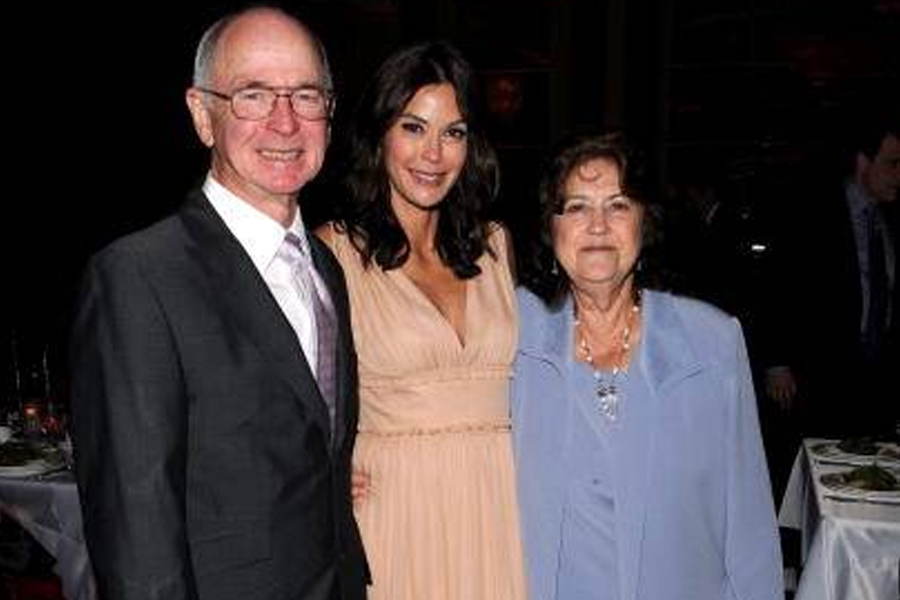
Family and social appearances appear. The December 9, 2007 photo shows Teri Hatcher with her father Owen enjoying a Lakers game. They appeared again in Paris on March 22, 2017. Though brief, these experiences shape the family’s emotions. They indicate continuity. They indicate that the father was involved in the daughter’s life throughout. Although public awareness changed, the family relationship did not.
I saw that as part of Owen W. Hatcher’s identity. Not just a techie with a patent. A more prominent family member mentioned him as a father and grandfather. Photographs, family references, and little ceremonies frequently capture that kind of life better than extended descriptions.
A timeline of Owen W. Hatcher and his family
| Date | Event |
|---|---|
| Earlier family record | Owen Walker Hatcher Sr. and Mittie Mae Graham are identified as earlier ancestors |
| December 8, 1964 | Teri Hatcher is born in Palo Alto |
| March 19, 1984 | Owen files his patent for forming and locating buried layers |
| December 11, 1984 | The patent is granted |
| 1994 | Teri Hatcher marries Jon Tenney |
| 1997 | Emerson Tenney is born |
| March 2003 | Teri Hatcher and Jon Tenney divorce |
| December 9, 2007 | Owen and Teri appear together at a Lakers game |
| 2017 | Owen and Teri appear together in Paris |
| 2025 | Recent public mentions continue to refer to him through family connections |
That timeline shows a life that moves in distinct, readable points. It does not flood the page. It steps across it.
The shape of his legacy
Owen W. Hatcher’s legacy is unique since it spans two universes. One is precise and related to patents and engineering. The other is related to a daughter whose prominence raised the family name. These planets don’t compete. They support each other.
His life was like a well-machined instrument. Although few embellishments are apparent, the building is sound. Exact details remain: spouse, father, grandfather, engineer, inventor. Together, they create a small but strong portrait.
FAQ
Who is Owen W. Hatcher?
Owen W. Hatcher is publicly known as Owen Walker Hatcher Jr., the father of actress Teri Hatcher, and as a nuclear physicist and electrical engineer. He is also associated with a 1984 semiconductor patent that reflects highly specialized technical work.
Who are the family members most closely connected to him?
The main family members publicly tied to him are his wife, Esther Beshur, his daughter, Teri Hatcher, his granddaughter, Emerson Tenney, and through Teri, her former husband Jon Tenney. Earlier genealogical records also connect him to Owen Walker Hatcher Sr. and Mittie Mae Graham.
What kind of work did Owen W. Hatcher do?
His public technical record points to semiconductor engineering and patent work. The patent he is associated with involved a process for forming and locating buried layers, which places him in the world of precision electronics and manufacturing.
Is there much public information about his personal finances?
No detailed public financial profile stands out in the material available. The public record is much stronger on family connections and technical work than on wealth or personal finance.
Why does Owen W. Hatcher appear in public discussions at all?
He appears mainly because of his daughter Teri Hatcher, but also because of his own technical patent work. The combination of family visibility and professional invention gives his name a steady, if quiet, public presence.
What makes his story notable?
His story is notable because it blends private family life with real technical achievement. He was not built as a public personality, yet his name still travels through both family history and engineering history.